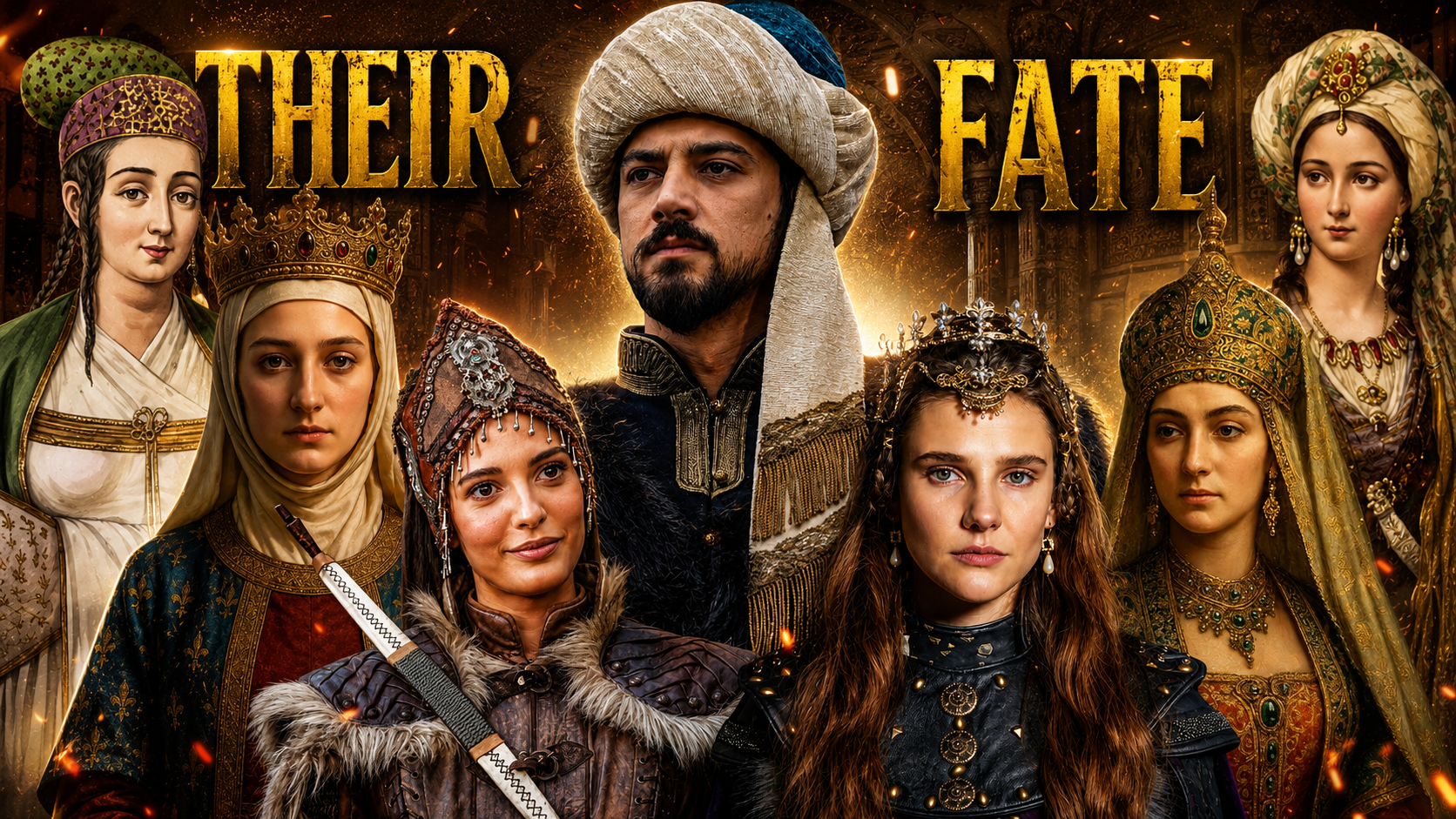
The story of Orhan Bey, the second ruler of the Ottoman dynasty, is often remembered for expanding the small frontier principality founded by Osman I into a growing empire. However, behind his military victories and political achievements stood seven women whose lives were shaped by diplomacy, royal ambition, and the brutal realities of medieval politics. Unlike modern marriages, most royal unions during the 14th century were arranged to strengthen alliances with neighboring kingdoms, Byzantine nobles, and Turkish beyliks. Only one of Orhan Bey’s marriages is widely considered to have been based on personal choice rather than political necessity. Here’s what history reveals about all seven wives of Orhan Bey and what ultimately happened to them.
Who Was Orhan Bey?


Orhan Bey (also known as Orhan Gazi) ruled the Ottoman state from 1324 to 1362 after succeeding his father, Osman I, the founder of the Ottoman dynasty.
During his reign, he:
- Captured Bursa and made it the Ottoman capital.
- Expanded Ottoman territory into northwestern Anatolia.
- Established the first regular Ottoman military institutions.
- Formed strategic marriage alliances with Byzantine and regional noble families.
These marriages played a major role in strengthening the young Ottoman state.
1. Nilüfer Hatun – The Only Love Marriage

Among Orhan Bey’s wives, Nilüfer Hatun stands apart.
Historical tradition describes her as the only woman Orhan personally chose to marry. She was reportedly captured during the siege of a Byzantine fortress while preparing for another wedding. Instead, fate led her to become Orhan’s wife.
After converting to Islam, Nilüfer became one of the most influential women in early Ottoman history.
Why She Was Important
- Mother of Sultan Murad I
- Regarded as the first Valide Sultan (Queen Mother) in Ottoman history
- Sponsored mosques, charitable foundations, and public works
- Lived long after Orhan’s death and became a respected political figure
Unlike many others in the Ottoman royal family, Nilüfer’s life ended peacefully.
2. Asporça Hatun – A Political Marriage That Ended in Tragedy
Asporça Hatun came from Byzantine nobility and married Orhan to strengthen relations between the Ottomans and Byzantine elites.
She became known for charitable work, supporting villages and helping the poor.
However, tragedy struck after Orhan’s death.
Her son, İbrahim Bey, challenged his half-brother Murad I for the throne.
Murad quickly eliminated the threat.
What Happened?
- İbrahim Bey was executed during the Ottoman succession struggle.
- Asporça reportedly died the same year after losing her son.
Her story highlights the harsh reality of royal succession in the medieval Ottoman court.
3. Theodora Kantakouzene – The Byzantine Princess Who Never Converted
Perhaps the most famous political marriage was Orhan’s union with Theodora Kantakouzene, daughter of Byzantine Emperor John VI Kantakouzenos.
The marriage was arranged during the Byzantine Civil War to secure an important alliance.
One remarkable condition accompanied the marriage.
Theodora refused to convert to Islam.
Historical accounts indicate she remained a Christian throughout her life.
Her Later Years
Following Orhan’s death:
- Her son Halil became involved in the struggle for succession.
- Halil was eventually executed.
- Theodora returned to Constantinople.
- She later became involved in palace political disputes before disappearing from historical records.
Her life reflects the fragile nature of political alliances between Byzantium and the Ottomans.
4. Eftandize (Elcim) Hatun – The Woman Who Avoided Court Politics
Very little survives about Eftandize Hatun, also known as Elcim Hatun.
Historians continue to debate her family origins, but most agree her marriage strengthened ties with influential Turkish tribal leaders.
Unlike many members of the Ottoman dynasty, she appears to have avoided political rivalries.
No major succession conflict or royal execution is directly connected to her family.
Instead, historical traditions suggest she spent much of her later life quietly in Bursa.
Sometimes, staying away from politics was the safest path.
5. Malik Hatun – The Forgotten Wife
Malik Hatun remains one of the greatest mysteries among Orhan Bey’s wives.
The surviving records mention only one important detail:
She was the mother of Sultan Hatun, believed to have been born around 1324.
Beyond this, historians know almost nothing.
Her disappearance from the historical record illustrates how many royal women were overlooked unless they influenced major political events.
6. Bali Hatun – Lost to History
Like Malik Hatun, Bali Hatun remains largely unknown.
Some sources associate her with the prestigious Palaiologos Byzantine dynasty, although evidence remains limited.
No reliable historical record explains:
- when she died,
- whether she played a political role,
- or how her life ended.
Sometimes history preserves victories and wars while forgetting the people who lived through them.
7. Theodora II – A Child Bride of Medieval Politics
The final wife on Orhan’s family tree may have had the most heartbreaking story.
Theodora II was reportedly the daughter of a Serbian prince.
She married Orhan while still a child—around twelve years old—as part of a diplomatic alliance between neighboring rulers.
Such marriages were unfortunately common throughout medieval Europe and the Near East.
After the wedding, the historical record becomes almost silent.
No reliable source clearly explains:
- how long she lived,
- whether she had children,
- or where she was buried.
Her unknown fate remains one of the biggest mysteries surrounding Orhan Bey’s family.
Why Did Orhan Bey Have So Many Political Marriages?
Royal marriages in the 14th century were rarely based on love.
Instead, they helped rulers:
- Secure military alliances
- Prevent wars
- Build relationships with Byzantine nobles
- Unite Turkish tribes
- Expand political influence
For Orhan Bey, marriage was an essential diplomatic strategy that strengthened the early Ottoman state.
Only Nilüfer Hatun is traditionally remembered as a marriage based on personal affection.
What Happened After Orhan Bey Died?
When Orhan died in 1362, the struggle for succession began almost immediately.
Murad I acted quickly to secure the throne.
Historical accounts indicate that two of his half-brothers—İbrahim Bey and Halil—were killed during the consolidation of his rule.
These events demonstrate the brutal reality of medieval dynastic politics.
Royal marriages created alliances, but they also produced rival heirs, making succession one of the most dangerous moments in Ottoman history.
Legacy of Orhan Bey’s Seven Wives
Although history remembers Orhan Bey as one of the founders of the Ottoman Empire, the lives of his wives reveal another side of the story.
Some became mothers of future sultans.
Some disappeared into obscurity.
Others watched their sons die in struggles for power.
Together, their stories show that royal marriages in the medieval world were rarely about romance. Instead, they were instruments of diplomacy, survival, and empire-building.
Behind every alliance stood real people whose lives were shaped by decisions they often had little control over.
Frequently Asked Questions (FAQs)
How many wives did Orhan Bey have?
Historical sources generally identify seven wives, although details about some remain uncertain due to limited surviving records.
Which wife did Orhan Bey marry for love?
According to Ottoman tradition, Nilüfer Hatun is regarded as Orhan Bey’s only love marriage.
Who was the mother of Sultan Murad I?
Nilüfer Hatun gave birth to Murad I, who became the third Ottoman ruler.
Did Theodora Kantakouzene convert to Islam?
Most historical sources indicate she remained a Christian throughout her life after marrying Orhan Bey.
Why were Orhan Bey’s marriages important?
His marriages helped secure alliances with Byzantine emperors, Serbian nobles, and Turkish tribal leaders, strengthening the rapidly expanding Ottoman state.