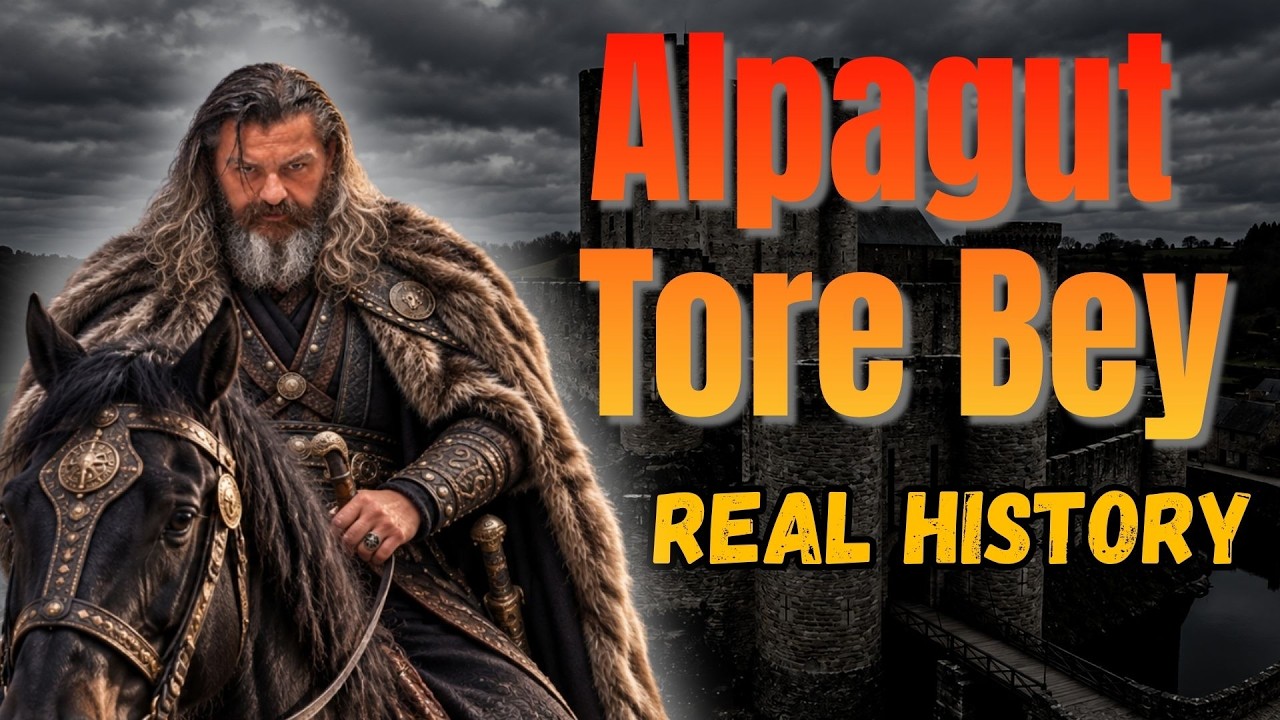
Was Alpagut Töre Bey a real commander who served Uzun Hasan, or is he a fictional character created specifically for Mehmed: Fetihler Sultanı Season 4? That question has already caught the attention of fans following the casting of Nurettin Sönmez as Alpagut Töre Bey. Viewers have started searching Ottoman chronicles and Persian sources for evidence of this mysterious Akkoyunlu commander. But there is an important problem: the historical record does not appear to contain a commander by this name. So why did the writers create him? The answer is actually more interesting than simply calling him fictional. His name was carefully constructed to sound authentically Turkic, while his role fills a very real gap in the historical record. To understand Alpagut Töre Bey, we first need to look at the Akkoyunlu state, Uzun Hasan, and how historical dramas transform incomplete history into compelling television.
Was Alpagut Töre Bey a Real Historical Figure?
Based on the surviving historical record, Alpagut Töre Bey does not appear to be a documented Akkoyunlu commander.
There is no widely recognized historical figure by this exact name in the major Ottoman and Persian historical traditions associated with the 15th-century Akkoyunlu period.
That means fans searching through serious historical sources are unlikely to find a biography of Alpagut Töre Bey waiting for them.
But this doesn’t necessarily mean the character’s entire concept is historically impossible.
It’s important to remember that medieval sources did not record every person who served a ruler.
The Akkoyunlu: The Historical World Behind the Character
The Akkoyunlu, commonly known as the White Sheep Turkmen, were a powerful Turkmen tribal confederation that became a major political force in the region during the 15th century.
Under Uzun Hasan, the Akkoyunlu expanded their influence across large parts of eastern Anatolia, Azerbaijan, Iraq, and western Iran.
Uzun Hasan himself is one of the best-documented figures of the period and will play an important role in Mehmed: Fetihler Sultanı Season 4.
But there is an obvious question:
If Uzun Hasan ruled such a powerful state, where are all the names of the commanders who served him?
Why So Many Historical Commanders Are Unknown
Historical records are rarely complete.
Kings, sultans, emperors, major battles, treaties, and political crises naturally received the most attention from chroniclers. Ordinary soldiers and even many important military officers often disappeared from the written record.
A ruler like Uzun Hasan would obviously have needed:
- Military commanders
- Tribal leaders
- Advisors
- Governors
- Cavalry commanders
- Palace officials
- Trusted personal warriors
Yet only a fraction of these people are known to us today.
This is where a fictional character like Alpagut Töre Bey can fit naturally into a historical drama.
What Does the Name “Alpagut Töre Bey” Mean?
One of the cleverest aspects of the character is his name.
Alpagut is constructed from an old Turkic warrior vocabulary and evokes the idea of a brave or solitary warrior. Meanwhile, Töre refers to the traditional Turkic concept of customary law, social order, and established rules.
And Bey was a title associated with a lord, chieftain, or leader.
Put together, Alpagut Töre Bey sounds exactly like the name of a powerful Turkic military lord.
That doesn’t prove the historical existence of the individual.
Instead, it helps explain why the writers may have chosen the name.
It sounds believable within the historical world they are trying to create.
Why Would the Writers Invent Him?
This is where historical drama becomes different from a documentary.
The writers aren’t necessarily trying to reproduce every historical detail word for word.
They need characters who can interact with the main historical figures, participate in battles, deliver important information, create rivalries, and move the story forward.
Uzun Hasan is a documented ruler.
But imagine trying to tell a television story about his military campaigns without giving him a recognizable commander who can appear repeatedly on screen.
That would leave the Akkoyunlu side without a strong recurring military personality.
Alpagut Töre Bey fills that gap.
Alpagut Töre Bey as Uzun Hasan’s Warrior
The character appears designed to represent the kind of powerful military figure a ruler like Uzun Hasan would realistically have needed.
He can serve as:
Uzun Hasan’s trusted warrior.
A military rival to Ottoman commanders.
A bridge between the Akkoyunlu army and the audience.
And potentially, one of the major antagonistic forces of Season 4.
This is a classic technique used in historical television.
The major historical events remain recognizable, while fictional characters are inserted into the spaces where the surviving sources provide limited information.
Nurettin Sönmez Returns to Historical Drama
The casting becomes even more interesting because Nurettin Sönmez is no stranger to the world of Turkish historical dramas.
He previously became widely recognized by audiences for his portrayal of Bamsı Beyrek in Diriliş: Ertuğrul and Kuruluş: Osman.
Bamsı is a legendary figure associated with the Book of Dede Korkut, but the television portrayal and the specific character development audiences saw on screen were heavily shaped by dramatization.
That experience makes Sönmez a natural choice for another powerful warrior role.
His physical presence and previous association with historical action roles make Alpagut Töre Bey particularly intriguing.
Fictional Does Not Mean “Bad History”
There is an important distinction here.
Calling Alpagut Töre Bey a fictional character does not automatically mean the series is presenting the entire storyline as historically false.
Historical dramas frequently combine three ingredients:
1. Documented Historical Figures
People such as Mehmed II and Uzun Hasan actually lived and played major roles in history.
2. Documented Historical Events
Wars, political developments, territorial changes, and diplomatic conflicts can provide the framework for the story.
3. Fictional or Dramatized Characters
Writers then create characters who can operate inside that framework and give the audience someone to follow through the events.
Alpagut Töre Bey appears to belong primarily to the third category.
The “Empty Space” in History
This is perhaps the best way to understand the character.
History gives the writers the skeleton.
Fiction gives them the muscle.
We know that Uzun Hasan had armies. We know the Akkoyunlu possessed military commanders and tribal leaders. We know that warfare during this period involved complex chains of command.
But we don’t necessarily know the name and personality of every warrior who stood beside the ruler.
That missing information creates room for dramatization.
Alpagut Töre Bey can therefore be understood as a fictional character placed inside a historically plausible environment.
Alpagut Töre Bey vs the Ottoman Commanders
Another reason the character could be important is the need for balance between the two sides.
The Ottoman storyline already has powerful military personalities.
If the Akkoyunlu are going to be presented as a serious threat, they need characters who can match the Ottoman commanders in terms of presence and ability.
Alpagut Töre Bey appears designed for exactly that purpose.
Rather than making Uzun Hasan’s army feel like a faceless mass of soldiers, the character gives the Akkoyunlu side an identifiable warrior who can stand against the Ottoman forces.
That could make the coming conflict much more personal.
Will Alpagut Töre Bey Become a Major Rival?
This is where the character becomes especially interesting.
Because he isn’t tied down by a detailed historical biography, the writers have considerable freedom.
They can develop his personality, loyalties, rivalries, victories, defeats, and relationships according to the needs of the story.
That means Alpagut Töre Bey could potentially become one of the most important fictional characters of Season 4.
And with Nurettin Sönmez playing him, expectations are understandably high.