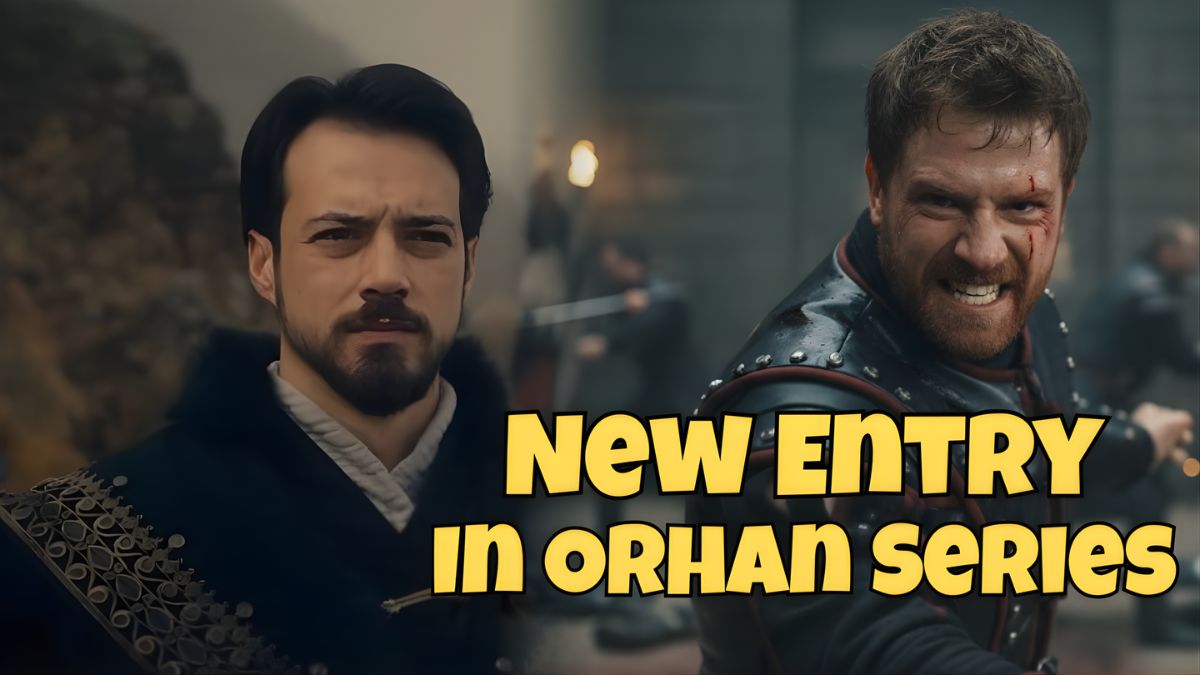
A warrior is coming. Not from royal blood. Not from noble lineage. But from fire, slavery, and revenge. His name is Andreas. With Episode 16, Kuruluş Orhan introduces one of its most intense new characters — a man forged not in palaces, but in ashes and chains. Known as The Macedonian Gladiator, Andreas brings a story that feels darker and more personal than most warriors we have seen so far. Let’s break down who he really is, where he comes from, and why his arrival could reshape the balance of power in the series.
Who Is Andreas? A Survivor, Not a Prince
Andreas was not born into war. He grew up in a simple fisherman’s family. His life was quiet. Peaceful. Ordinary. Until everything changed. At the age of sixteen, his village was attacked by Kipchak raiders. His family was slaughtered. His home was reduced to ashes. What remained was one object: A Kipchak dagger. That dagger became more than steel. It became memory. Grief. Identity. From that moment, Andreas stopped being a boy. He became a storm waiting to rise.
From Refugee to Slave: The Despotate of Morea
After losing his family, Andreas wandered toward the lands of the Despotate of Morea, hoping perhaps to survive, maybe to rebuild. Instead, fate delivered another cruelty. He was captured. Chained. Sold as a slave. But not an ordinary laborer. He was sent into the arena as a gladiator — a disposable fighter meant to entertain crowds and die for spectacle. Thousands had entered before him. Few had survived. Andreas was expected to be forgotten.
The Arena Rebellion: Birth of the Macedonian Gladiator
Inside the arena, something changed. Instead of breaking, Andreas fought back. Steel clashed. Crowds roared. Blood filled the sand. And then he did the unthinkable. He killed the Emperor’s guard. One strike. One rebellion. One declaration: “I am not a slave.” That moment transformed him. The crowd no longer saw a prisoner. They saw a warrior. The arena gave him a new name: The Macedonian Gladiator.
Why Andreas Refused Freedom
Here is what makes Andreas different from typical revenge-driven characters. When given the chance to ask for freedom, he refused. When offered the option of death, he rejected it. Instead, he made one powerful request:He wanted to become a knight. This decision reveals everything about his character. He does not seek escape. He seeks purpose. He does not want revenge alone. He wants dignity restored. His journey is not only about killing enemies. It is about reclaiming what was stolen from him at sixteen — identity, honor, and belonging.
How Andreas Fits into the Larger Political Storm
Andreas is not entering the story randomly.
His backstory connects to multiple political tensions:
-
The Kipchaks who destroyed his family
-
The Byzantine arena culture
-
Frontier conflicts between empires and tribes
This positions him directly at the crossroads of power struggles in Anatolia.
He carries personal history tied to larger political forces. That makes him unpredictable.
Will he align with Orhan Bey?
Or will he walk his own path, shaped entirely by revenge and justice?
Why Andreas Could Change the Balance of Power
Unlike princes and commanders, Andreas has nothing to protect and nothing to inherit. That makes him dangerous. He fights not for land or dynasty — but for memory. A man without fear of loss is often the most powerful force on the battlefield. If he joins Orhan Bey, he could become one of the most loyal and fearless warriors in the Kayı ranks. If he remains independent, he could become a wildcard capable of shifting alliances and destabilizing political plans.
Predictions: What’s Next for Andreas?
Based on the trailer and his backstory, several possibilities stand out:
-
He may first appear as a lone warrior, loyal to no one.
-
His connection to the Kipchaks could tie him to future conflicts in Anatolia.
-
His internal struggle between revenge and justice may define his character arc.
-
He could eventually become a symbol of honor regained through struggle.
What makes his story compelling is that it is deeply personal. His war is not about expansion. It is about closure.