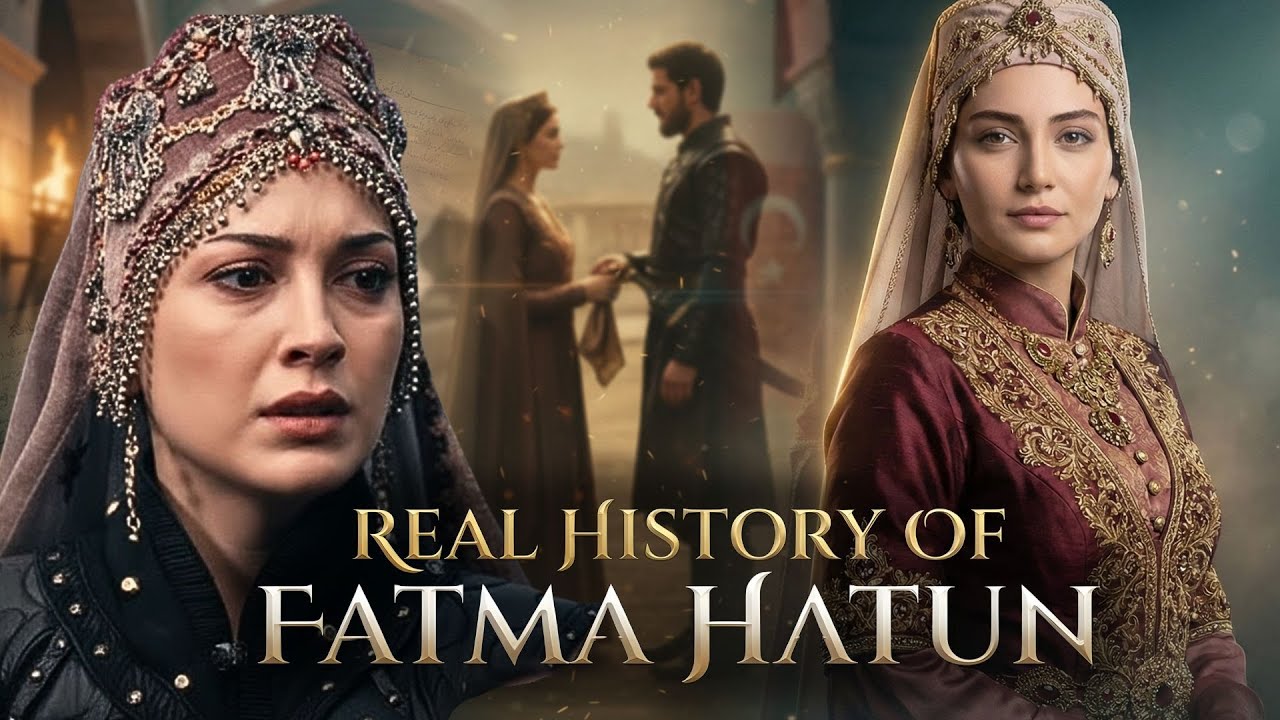
History often preserves the names of warriors, conquerors, and kings—but it is quieter when it comes to the women who stood beside them. Fatima Hatun, the only daughter of Osman Ghazi, is one such figure. In modern Turkish dramas she appears as a fierce, strategic, emotionally complex heroine. But how much of that is historically accurate? One question has sparked endless debate among fans: Did Fatima Hatun truly fall in love with a Roman commander like Flavius? Today, we uncover the truth behind the myths, the drama, and the forgotten history.
Who Was Fatima Hatun?
Fatima Hatun was born around 1284 during the early frontier years of Osman Ghazi. At that time, the Ottomans were not yet an empire but a small tribal principality positioned between Söğüt and Byzantine territories.
She was the daughter of Malhun Hatun and the full sister of:
-
Orhan Gazi
-
Alaeddin Bey
These two men would go on to shape the destiny of the Ottoman state. Fatima, however, lived a quieter life—one that was not recorded with the same detail or praise.
Early Ottoman chroniclers rarely wrote about women unless they played a major political role. As a result, Fatima Hatun appears only briefly in historical documents.
What Do Historians Actually Know?
Despite popular online claims and dramatic portrayals, historically verified information about Fatima Hatun is extremely limited. Scholars rely on early genealogies and foundation records to identify her.
Confirmed Facts About Fatima Hatun:
She was the only daughter of Osman Ghazi
She is named in Orhan Gazi’s waqf (foundation deed), a legally preserved document
She lived into Orhan Gazi’s rule
But history does not record:
-
Her marriage
-
Her children
-
Her political influence
-
Any formal alliances
Her trail ends quietly—one of many Ottoman women whose stories were overshadowed by the chronicles of war and leadership.
The Big Question: Did She Marry Flavius?
Modern dramas portray Fatima Hatun in a romantic arc with a Roman commander named Flavius. Their chemistry, conflict, and emotional turmoil create excellent drama.
But historically?
No. This storyline is completely fictional.
-
There is no Roman commander named Flavius in any early Ottoman or Byzantine record.
-
No historian—including Aşıkpaşazade, Neşri, or Şükrullah—mentions such a person.
-
No source links Fatima Hatun to a Byzantine noble or Christian warrior.
Conclusion:
Flavius never existed—and therefore Fatima Hatun never married him.
This subplot is purely a dramatic creation designed to give Fatima a modern, emotional storyline.
Popular Myths and False Claims
Over the years, fans and websites have circulated many unverified claims:
-
“She married Amir Bayan.”
-
“She had three children.”
-
“She was a skilled archer.”
-
“She advised Orhan Gazi.”
These claims sound exciting—but none of them are supported by historical evidence. They are the product of folklore, creative imagination, and the influence of television.
Fatima Hatun in Turkish Dramas
While history is silent, Turkish television has brought Fatima Hatun back to life with vibrant characterizations.
In Kuruluş Osman:
She was portrayed as a child by Cemre Demircan and later Leya Kırşan.
In Kuruluş Orhan:
The adult Fatima is played by İpek Arkan, presented as:
-
A strategic thinker
-
A skilled fighter
-
A woman caught between loyalty and forbidden love
-
A symbolic bridge between empires
For TV, Fatima Hatun becomes a central emotional force—not because of recorded history, but because her mysterious silence provides a blank canvas for storytelling.
Why Does History Record So Little About Her?
The early Ottoman state was a warrior frontier beylik, not an administrative empire. Detailed records—marriage registries, palace documentation, harem archives—did not yet exist. Chroniclers focused on military achievements, tribal alliances, and male leaders.
Women were recorded only if they significantly shaped political events.
Fatima Hatun lived in a time when the stories of women were rarely written.
Could She Have Married a Byzantine Noble in Reality?
Some viewers wonder whether a marriage like the one shown in the series could have happened.
Historically:
-
Early Ottoman princesses rarely married Byzantines
-
Diplomatic marriages with Christians became more common centuries later
-
Alliances in the 13th–14th centuries were formed through conquest, not marriage
So even hypothetically, a Fatima-Flavius marriage is extremely unlikely.
Why Fatima Hatun Still Matters
Her importance lies not in historical detail but in what her existence symbolizes.
Fatima Hatun reminds us that:
-
The Ottoman dynasty included women whose contributions, though undocumented, were vital
-
Not all influential lives leave written records
-
Forgotten figures can still hold deep cultural and emotional power
Her name in the waqf document shows she was honored within her family—even if her life story beyond that remains hidden