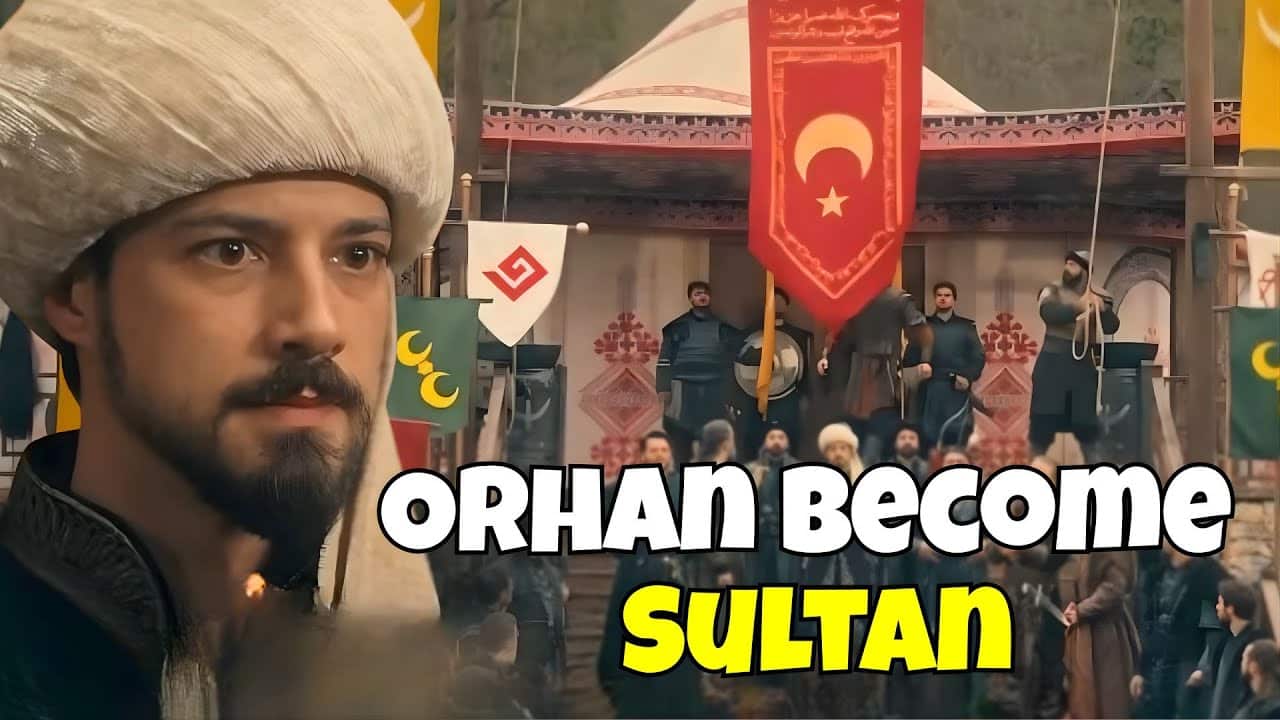
They tried to kill her. They tried to frame him. But they forgot one thing. He is no longer just Orhan Bey. He is Sultan Orhan. Episode 11 Trailer 2 of Kuruluş: Orhan doesn’t just tease conflict—it announces a new era. One defined by betrayal, political conspiracies, broken hearts, and ruthless authority. This is no longer a tribal story. This is the birth of a sultanate.
The previous episode ended with silence heavier than any battlefield. Osman Gazi was laid to rest. A legend ended. But from that loss, something greater rose.
-
Bursa was conquered
-
Authority shifted
-
Leadership transformed
Episode 11 Trailer 2 shows Orhan stepping forward—not as a bey, but as a sultan.
The visual change is striking:
-
Royal robes
-
Massive turbans
-
Elevated posture
-
A formal Divan setting
This is no longer tribal leadership.
This is the foundation of Ottoman statehood.
For the first time, the series looks imperial—and it feels intentional.
A Conspiracy Born From Fear
Power never rises without resistance. Enter Demir Khan—introduced as an ally, but terrified by Orhan’s rapid rise. Bursa has fallen, territories are expanding, and armies are forming. Demir Khan believes Orhan is becoming unstoppable.
So he does what the most dangerous enemies do:
-
Smiles in public
-
Sharpens the knife in private
He joins forces with Timurtaş, and together they plan something truly sinister.
The Assassination Plot Against Holofira
Their target is Holofira.
Not because she is weak—but because she is powerful in her innocence and influence.
The plan is brutal:
-
Kill Holofira
-
Frame Orhan
-
Turn the people against their new Sultan
But the plan fails.
Orhan saves her.
His arrow moves faster than their lies.
And in that moment, everything changes between Orhan and Holofira. Fear turns into trust. Trust becomes admiration. Destiny quietly steps in.
Most likely, this rescue marks the true beginning of their love story—one that hints strongly toward a wedding around Episodes 14 or 15.
Saroz’s Death and Flavius’ Awakening
Another powerful revelation reshapes the story. The truth emerges: Saroz—not Osman, not Orhan—killed Flavius’ father. When Flavius learns this, his entire worldview collapses. His hatred. His revenge. All misdirected. Then justice arrives. Orhan’s arrow strikes Saroz. Clean.Final.
This moment does two things at once:
-
Clears Orhan’s name
-
Breaks Flavius emotionally
Pain and closure collide. From this point on, Flavius is fully convinced of Orhan’s innocence—and becomes his ally.
Fatima, Flavius, and a Love Built on Secrets
Just when the episode seems full, the emotional weight deepens. Fatima Hatun stops Flavius from fighting Yakut—and reveals a truth no one expected. Yakut is her fiancé. Silence follows. Shock settles in. And then comes the final blow: Fatima learns who Flavius really is. His true identity. His secrets. This isn’t romance anymore.
It’s tragedy. This storyline promises to be one of the most emotionally devastating arcs of the episode.
The Mongol Message—and the Birth of a Sultan
As if betrayal and heartbreak weren’t enough, a Mongol messenger arrives with threats and arrogance.
But Orhan is no longer the man he once was.
He doesn’t negotiate.
He doesn’t warn.
He beheads the messenger.
Cold.
Fearless.
Final.
Then he declares:
“I am Sultan Orhan, son of Osman Bey.”
That line alone sends chills.
This is the moment the world understands: a new ruler has arrived.
Symbolism, History, and Authority
This episode is heavy with symbolism—and much of it is historically accurate:
-
The new flags
-
The Divan structure
-
Armed guards holding swords and arrows
-
The formal council setting
This is how early Ottoman rule functioned. This is how authority was displayed. The comparisons to later sultans aren’t exaggeration—they’re continuity.
For the first time in many episodes, the series fully respects the legacy it inherited.
Performance and Execution
Murat Yıldırım’s portrayal of Orhan feels:
-
Controlled
-
Commanding
-
Royal
You don’t just see leadership—you feel it.
And the recurring theme of betrayal lands hard:
Enemies don’t always come with swords.
Sometimes, they come with smiles.
Final Rating: 8 Out of 10
According to this trailer’s execution, 8/10 feels justified.
Why it works:
-
Explosive pacing
-
Strong emotional beats
-
Improved cinematography
-
Clear historical grounding
-
Powerful dialogue
-
Real consequences
After a run of weaker episodes, this feels like a reset—a rebirth driven by audience pressure, falling ratings, and a production team finally listening.